
Custom Ceramic Rings and Related Component
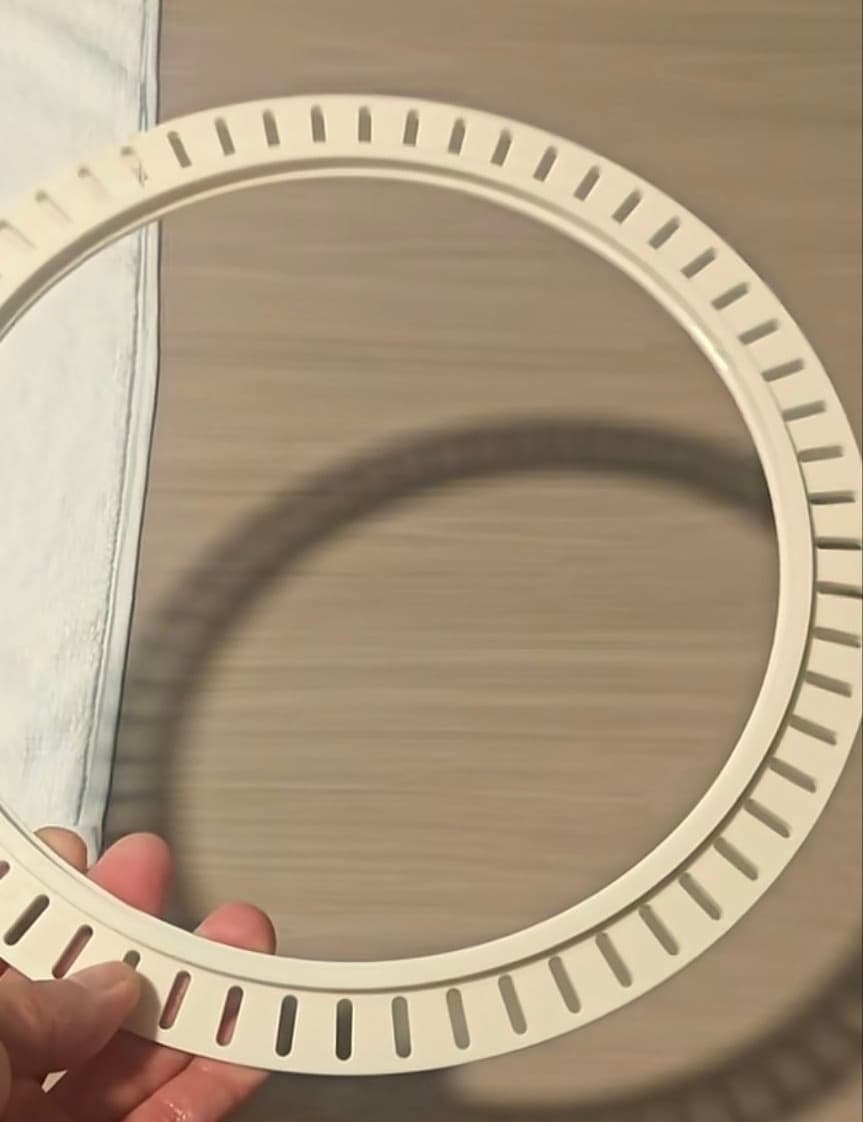
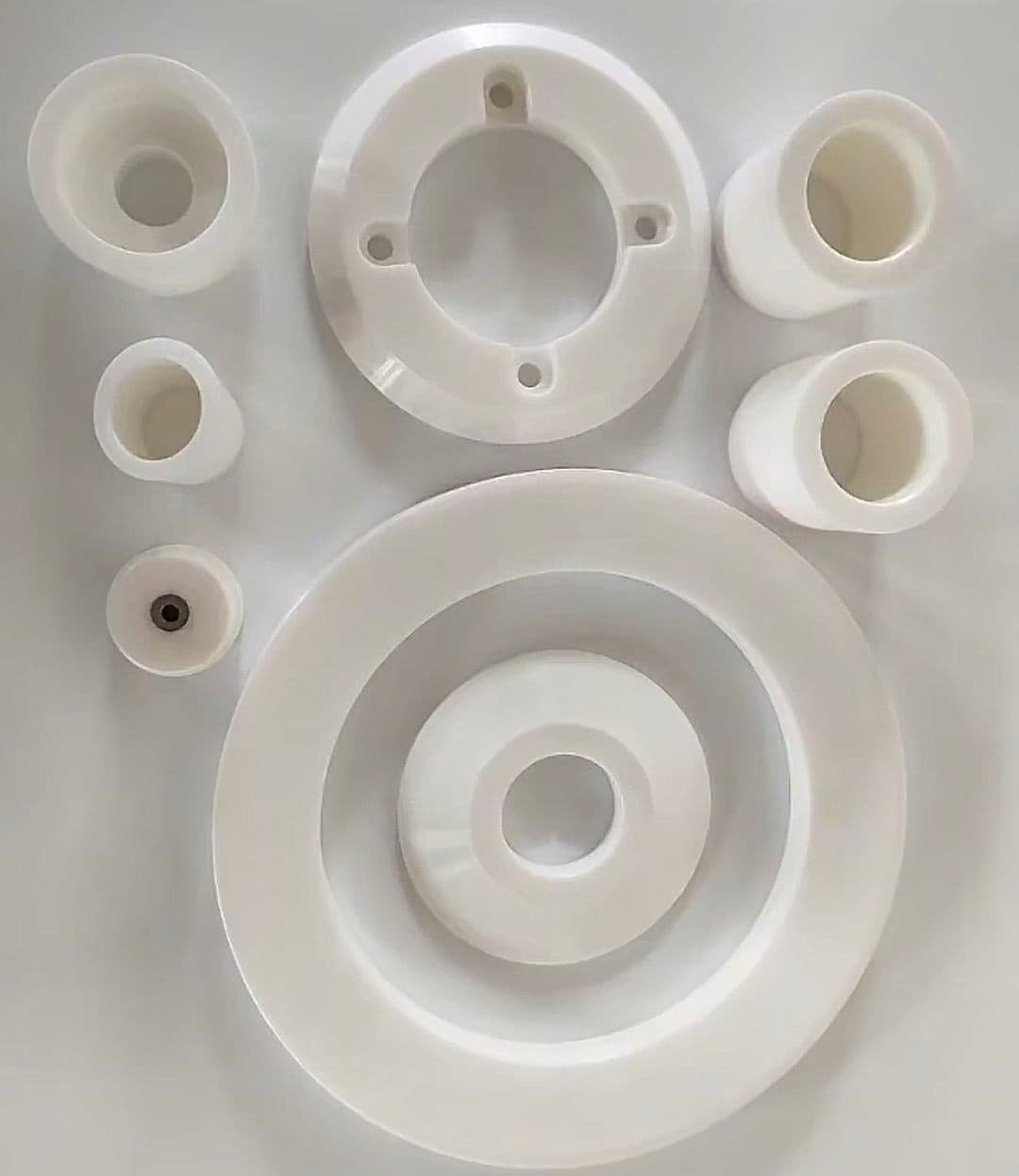
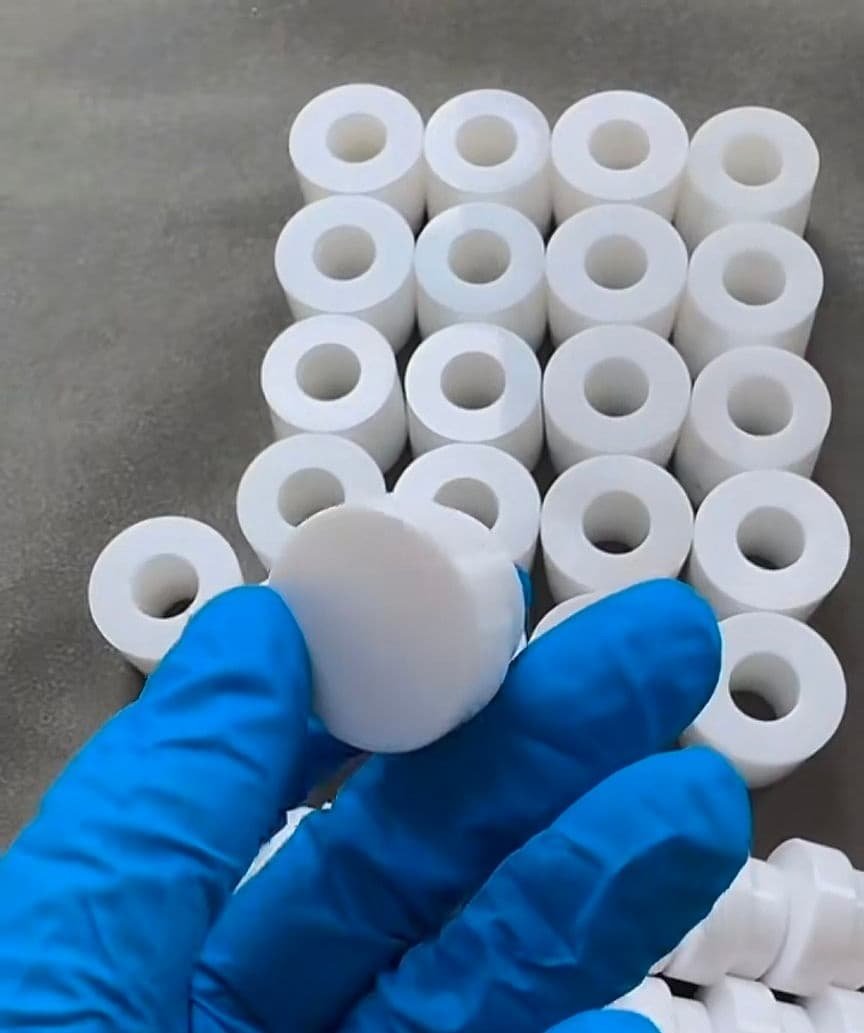
Ceramic Rings for Sealing, Spacing and Insulation
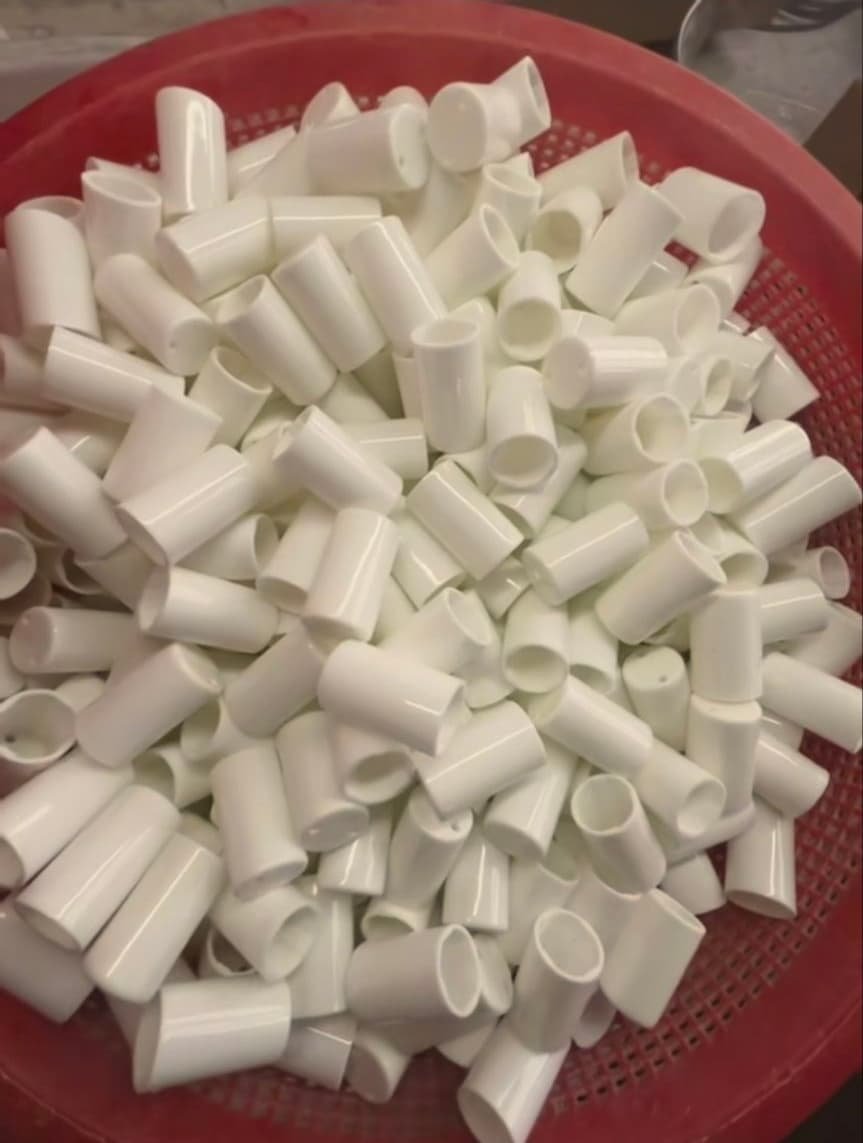
Ceramic Pins and Shafts
Pins and shafts may support the same assembly as a custom ring, but their dimensions, loads, surfaces and material selection require a separate drawing-led review.
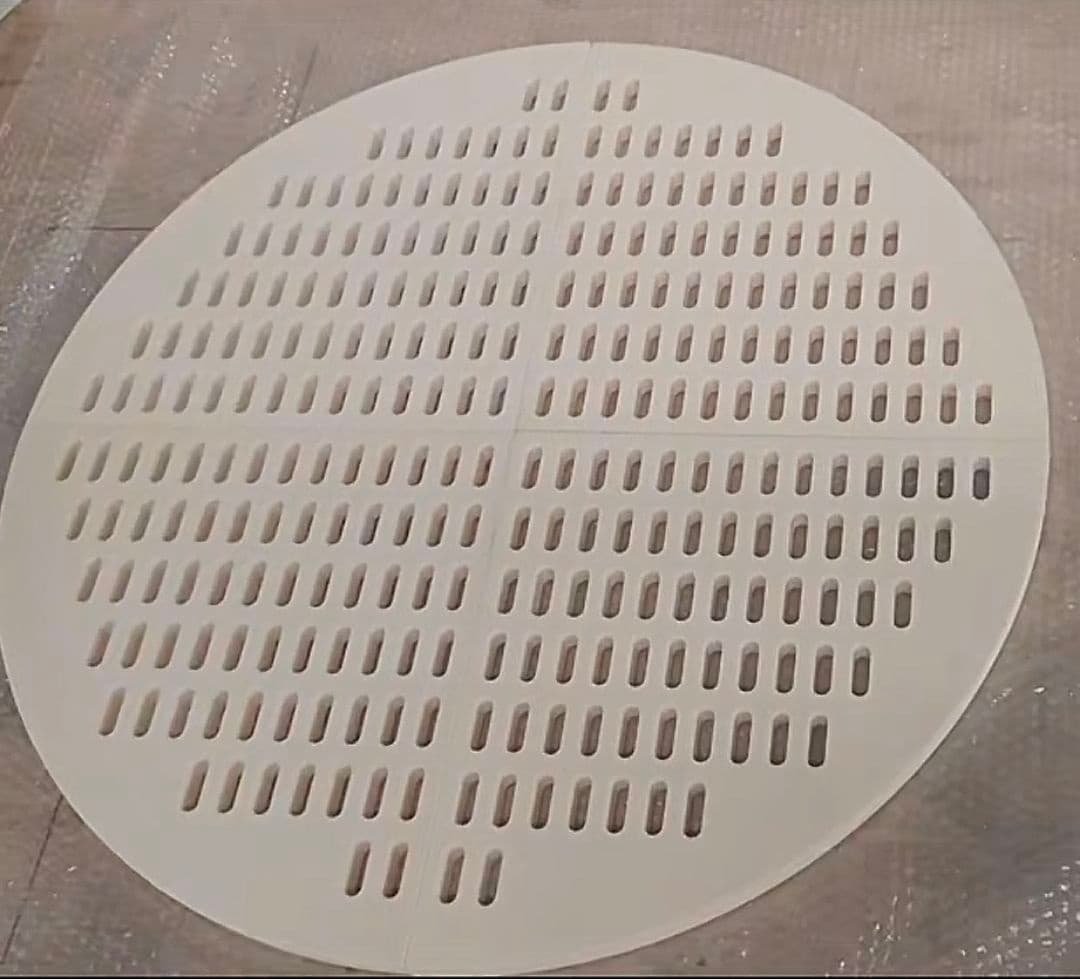
Ceramic Plates and Discs
Plates and discs can be evaluated as adjacent ceramic components where the assembly requires spacers, supports or insulating elements alongside a ring.
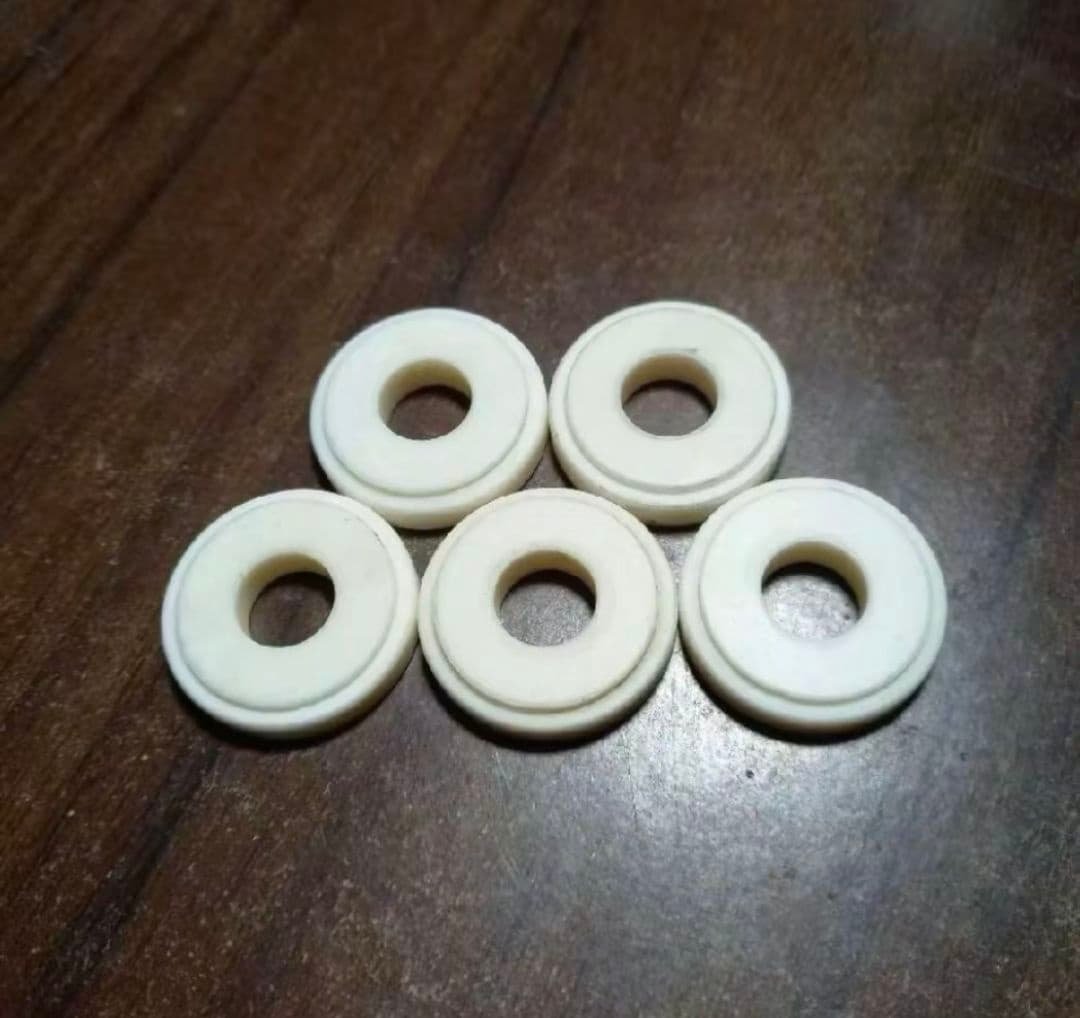
Ceramic Rings, Seals and Washers
Custom alumina rings, seals and washers can be reviewed around bore, face, seating, clearance and interface requirements for the intended assembly.
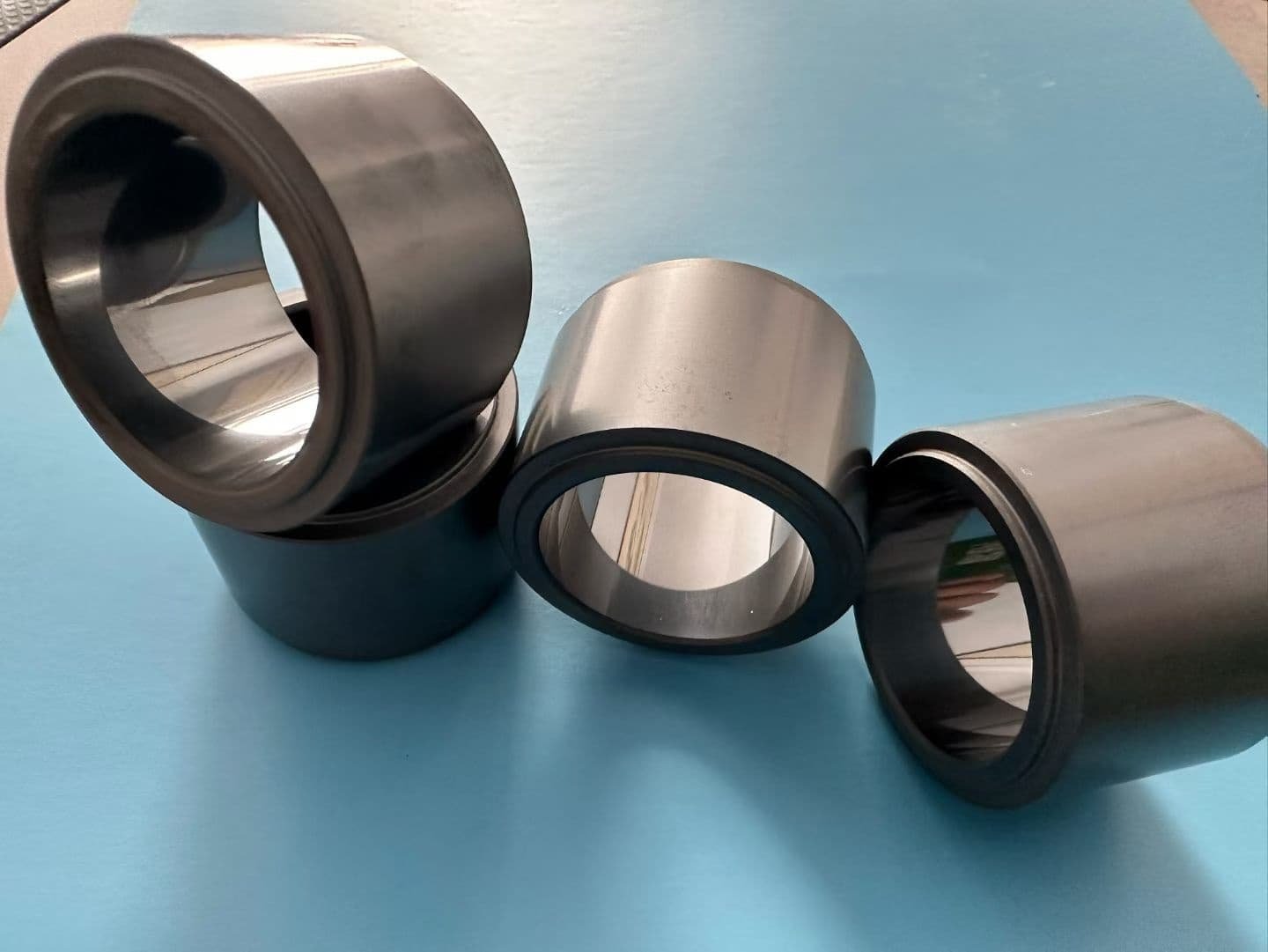
Ceramic Tubes and Nozzles
Tubes and nozzles are related forms, not automatic ring applications; assess them separately for fluid path, wall section, interface, temperature and inspection needs.
Where Custom Ceramic Rings Fit the Assembly
Precision Machinery
In machinery, custom rings may act as spacers, guides, seals or wear-related interfaces. Review contact loads, motion, alignment, mating materials, edge condition, assembly method and the dimensions that control service fit.
- Contact and wear interfaces reviewed early
- Grinding and lapping route assessment
- Inspection matched to assembly-critical features
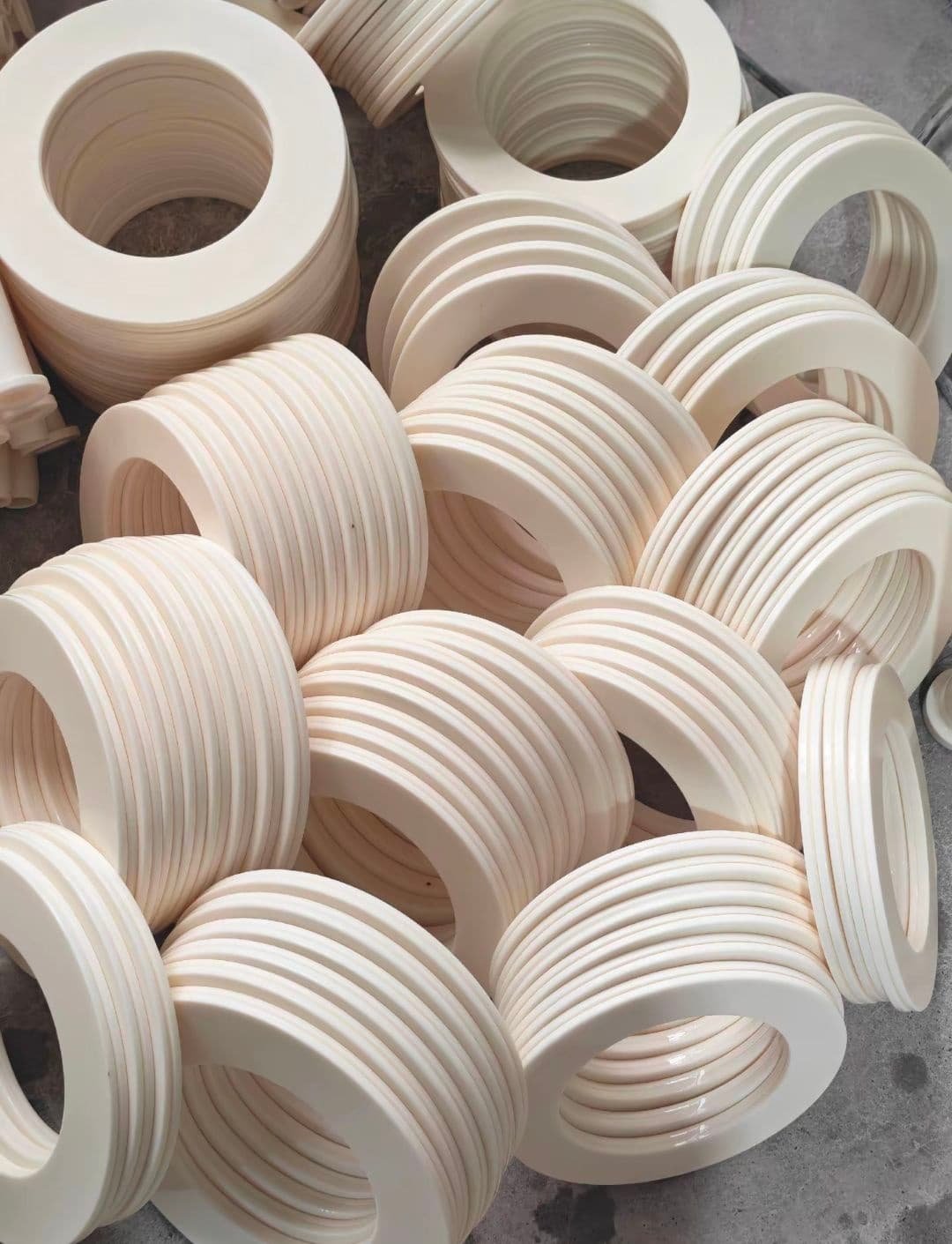
Guide to Sourcing Custom Alumina Ceramic Rings
Define the Ring Function and Operating Duty
Start with the ring’s job in the assembly rather than the material name alone. State whether it acts as a seal, spacer, washer, insulator, guide, wear interface or locating element, and identify how it contacts neighboring parts. Provide the bore, outside diameter, thickness, shoulders, grooves, chamfers, edge conditions and any asymmetric features shown on the drawing.Describe the real duty: temperature range and cycling, pressure, motion, contact load, media, atmosphere, cleanliness expectations and exposure duration. Note whether the ring is clamped, sliding, rotating, compressed or installed with clearance. Mating materials matter because thermal expansion, hardness, surface finish and assembly force can influence fit and damage risk. Identify the dimensions that control assembly and the surfaces that control performance.For quotation, include annual or project quantity, prototype needs, expected revision status and any special packaging or traceability expectations. If operating data is incomplete, label assumptions for review. A supplier can then assess whether alumina is a sensible starting point, whether another ceramic family should be compared, and which forming, sintering, machining and inspection questions must be answered before pricing or production planning.
Choose Alumina and Compatible Interfaces
Alumina is the defined material focus for this page, but a useful selection review connects the ceramic to the ring’s interfaces and duty. Specify the required alumina grade or allow the supplier to propose an appropriate grade for review; do not rely on the word “alumina” as a complete specification. Discuss the ring’s section, bore, faces, surface condition and expected contact with metals, polymers, glass or other ceramics.Check compatibility with the operating media, temperature cycle, mechanical loading, wear mechanism and assembly method. A ring that is stable in one environment may require a different design or material comparison in another. Consider thermal expansion mismatch, point loading, edge chipping, clamp force, sliding contact and cleaning conditions. If electrical insulation is relevant, define the function and acceptance evidence without assuming a blanket compliance claim.Ask the supplier to explain how material selection affects forming, shrinkage, sintering, machining, finishing and inspection. Where silicon carbide, zirconia or silicon nitride appears attractive, compare the complete route and interface behavior rather than isolated material claims. The RFQ should identify who approves substitutions, what material documentation is required and which characteristics must be verified on prototype or production rings.
Review Ring Geometry and Manufacturing Routes
Ring geometry should be reviewed together with quantity and process sequence. Simple annular shapes may support one route, while thin sections, deep bores, grooves, steps, interrupted walls, tight face relationships or difficult inspection access can change the manufacturing plan. Ask how the proposed route handles green forming, sintering shrinkage, distortion, machining allowance and support of fragile features.For repeat quantities, ceramic injection molding may be considered where tooling and geometry justify it. Tooling cost, shrinkage behavior, wall-section variation and post-sinter finishing should be explained before approval. Other forming approaches may be more practical for prototypes, low volumes or larger rings. Fully sintered rings can be evaluated for CNC machining, grinding, lapping and surface finishing, but access and feature geometry determine what is feasible.Review datum strategy and functional surfaces early. Identify whether the bore, faces, parallelism, concentricity, flatness, groove or seat controls assembly. Ask for a process flow showing where each critical feature is established and inspected. A sound quotation should state assumptions, proposed route, tooling implications, expected handoffs and unresolved risks. It should not imply that every broader capability is already verified for every ring design.
Set Inspection and Acceptance Criteria
Inspection requirements should be written around function, not copied from a generic checklist. Mark critical dimensions on the ring drawing and define datums, measurement references, units, sampling expectations and acceptance limits. Typical review points may include bore and outside diameter, thickness, face relationships, concentricity, flatness, edge condition, grooves, surface finish and visible damage, but only the application should determine what is critical.Consider how ceramic characteristics affect inspection. Sintered condition, machining direction, surface finish, edge protection and measurement force can influence results. Ask how the supplier will distinguish dimensional nonconformance from handling damage, and whether inspection access is practical for internal surfaces or recessed features. If a report is required, specify the dimensions, sample basis, format and whether material or process records are needed.Prototype acceptance should be separated from production release. A prototype may confirm fit and route assumptions while production approval may require repeatability evidence and a defined final inspection scope. Agree what happens when a dimension is ambiguous, a substitution is proposed or a feature cannot be measured directly. Clear criteria reduce quotation gaps and give procurement an objective basis for comparing suppliers without inventing certifications or unverified performance guarantees.
Compare Prototype and Production Quotations
Compare quotations by separating engineering review, tooling, prototype parts, inspection and production pricing. A low prototype price may not represent the eventual route, while a tooling-inclusive proposal may hide which costs are one-time and which recur per ring. Ask each supplier to identify the proposed material, forming method, sintering approach, post-sinter machining, finishing operations, inspection scope and packaging assumptions.Check whether the quotation addresses your actual geometry. It should reference the drawing revision, quantity, critical features, material status, tolerances and surface requirements. Clarify what is included if the supplier identifies a manufacturability issue, requests a tolerance change or recommends a different ring section. If lead time, minimum order quantity or capacity is not documented, request project-specific confirmation rather than accepting a generic promise.For prototypes, define the purpose of the build: fit check, material screening, process learning, inspection validation or functional testing. For production, ask how approved requirements will carry into repeat batches and how changes will be controlled. Compare tradeoffs transparently: standard sourcing may be faster for an available shape, while a custom route may better match the drawing. The right decision depends on total engineering risk, not unit price alone.
Prepare a Complete Ring RFQ and Qualification Plan
A complete RFQ should let the supplier understand the ring without reconstructing the project from scattered messages. Attach the latest 2D drawing and 3D model, identify the drawing revision, state the material preference, list quantities by phase and describe the assembly function. Include operating temperature, cycling, pressure, media, loads, motion, mating materials, installation method, packaging needs and any confidentiality or documentation requirements.Mark critical dimensions and surfaces, define inspection evidence and state whether prototypes are required before production. Ask for the proposed forming route, tooling assumptions, sintering considerations, machining and finishing operations, material documentation, quotation validity and any exclusions. Request explicit identification of unverified items, including feasibility, capacity, minimum order quantity, lead time and production scale. These should be confirmed for the project rather than inferred from general capability statements.Use qualification gates: drawing review, material approval, prototype fit and function, dimensional inspection, assembly validation and production release. Record approved deviations and change-control responsibilities. For alumina rings, ask how the supplier will protect edges, control functional faces and inspect the bore or seating surfaces. This structure gives engineering and procurement a common basis for evaluating risk, comparing offers and deciding whether C-CERAMIC’s integrated route fits the requirement.